BlossomUp Love Language Test
Some kinds of care go straight in and others pass by. A few quiet scenes, and you will see which way reaches you first.
≈5 min Questions: 25
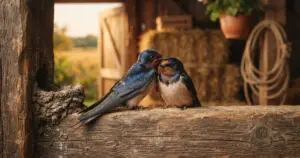
You know that feeling when someone means well and it still doesn’t land, while a small gesture from someone else goes straight in? This test doesn’t judge whether you are good at love or hard to please. It shows how care tends to reach you. Choose the answer that fits right now, take about five minutes over 25 short scenes, and you get your strongest way of feeling cared for, with the other four next to it. Which one do you reach for first?

BlossomUp Love Language Test
Receiving Gifts
You're not asking for too much. You read care in small things.
Judging by your answers, care lands hardest as something you can hold, a card or a stone that says you crossed someone's mind.
Wanting the token doesn't make you shallow or hard to please.
Perhaps a small object stores a moment of someone's attention, the way a pebble on a windowsill keeps a whole walk.
Of the five ways to feel cared for, this one led for you, which makes it a leaning and not a proven type. Acts of Service and Physical Touch are its neighbors, and a near-tie with either deserves to be believed.
The catch is that a small gesture that never came can feel bigger than the care all around it. None of this tells anyone what they owe you, and someone whose profile differs is simply different.
One small step: set one object you already own where your eyes will land.
StillNormal

Maryna Lyadneva psychologist
BlossomUp Love Language Test
Receiving Gifts
You're not asking for too much. You read care in small things.
Judging by your answers, care lands hardest as something you can hold, a card or a stone that says you crossed someone's mind.
Wanting the token doesn't make you shallow or hard to please.
This is my result. What will the test show you?
Take the test · stillnormal.com
BlossomUp Love Language Test
Acts of Service
Fussy, or just observant? You read love through effort.
It looks like care lands hardest as help that shows up unasked, a chore quietly gone before you noticed.
Trusting deeds over promises is a sound way to read people, and it is yours to keep.
One reading is that effort cannot be faked, since it costs someone time. A porch light left on says as much as a speech.
Words or company with no task attached may seem lighter to you than intended, though they carry the same warmth.
Quality Time and Receiving Gifts stand closest in your profile, so a close runner-up in either is genuine. You value all five to some extent, which makes this your strongest lean and not a fixed label, and it does not speak for what others ought to do.
One small step: cross one chore off your mental list without doing it.
StillNormal
Maryna Lyadneva psychologist
BlossomUp Love Language Test
Acts of Service
Fussy, or just observant? You read love through effort.
It looks like care lands hardest as help that shows up unasked, a chore quietly gone before you noticed.
Trusting deeds over promises is a sound way to read people, and it is yours to keep.
This is my result. What will the test show you?
Take the test · stillnormal.com
BlossomUp Love Language Test
Words of Affirmation
Words settle you. They are where you keep care.
Your answers point to language as the carrier: a text out of nowhere or a line of thanks lands harder than a favor.
Wanting things said aloud is an ordinary wish, and it sits comfortably beside care shown in other ways.
Maybe a sentence is easier to keep than an afternoon. It folds into a coat pocket like a note and comes out whenever you need it.
This is a preference and not a proven type. It says how care reaches you, and what anyone else should do is no part of it, and two different profiles are no trouble.
Silence can read as a gap to you even when warmth is plainly there. Quality Time and Physical Touch sit next door, and a result close behind in either would be genuine too.
One small step: say one kind sentence about yourself out loud, in your own voice.
StillNormal
Maryna Lyadneva psychologist
BlossomUp Love Language Test
Words of Affirmation
Words settle you. They are where you keep care.
Your answers point to language as the carrier: a text out of nowhere or a line of thanks lands harder than a favor.
Wanting things said aloud is an ordinary wish, and it sits comfortably beside care shown in other ways.
This is my result. What will the test show you?
Take the test · stillnormal.com
BlossomUp Love Language Test
Physical Touch
Calm may reach you through touch. Care can arrive without a word.
Often this means closeness in the body is what convinces you, a hand held or a shoulder to lean on.
Needing contact is not a flaw in how you love.
It may be that touch works before language does, the way the weight of a blanket settles a room before anyone speaks.
Care that comes only as words or as help can feel thin to you, even when meant fully.
Receiving Gifts and Words of Affirmation are the closest neighbors, so a score close behind on either is worth taking at face value. Of the five ways this is your strongest lean, a tendency and not a verified type, and it describes how you receive care, not what anyone else should give.
One small step: hold your hands under warm running water.
StillNormal
Maryna Lyadneva psychologist
BlossomUp Love Language Test
Physical Touch
Calm may reach you through touch. Care can arrive without a word.
Often this means closeness in the body is what convinces you, a hand held or a shoulder to lean on.
Needing contact is not a flaw in how you love.
This is my result. What will the test show you?
Take the test · stillnormal.com
BlossomUp Love Language Test
Quality Time
You notice who is really there. That is how care arrives.
It seems being fully heard reads as care to you, more than anything handed over or fixed.
Wanting someone's whole attention is a form of respect, and it belongs to you.
Attention may be the one gift that cannot be prepared in advance, like a table laid for two with nobody watching the time.
Since all five ways matter to people in some degree, read this as the top of a profile and not a scientific type. Words of Affirmation and Acts of Service sit beside it, and either trailing slightly counts too.
Help, presents and praise given without real attention can slip past you, even if sincere. This is about how you take in care, and what anyone else owes you is a separate matter.
One small step: give your whole attention to one ordinary task for ten minutes, nothing else in your hands.
StillNormal
Maryna Lyadneva psychologist
BlossomUp Love Language Test
Quality Time
You notice who is really there. That is how care arrives.
It seems being fully heard reads as care to you, more than anything handed over or fixed.
Wanting someone's whole attention is a form of respect, and it belongs to you.
This is my result. What will the test show you?
Take the test · stillnormal.com Maryna Lyadneva psychologist
How this test works
Where the questions come from, what the scale rests on, and why the result is not a diagnosis.
The test describes which of five ways of feeling cared for, gifts, help, words, touch and time, the reader's answers lean toward most, shown as a profile across all five.
Methodology
The test rests on a well-known way of sorting how people feel looked after: through presents, practical help, kind words, physical closeness or undivided time. Its 25 scenes were written for this test, five for each of those ways.
Answers are tallied separately for each way, so the result is a profile, with the leading lean named outright. Care from a friend, a relative or a partner all fits, no relationship status is assumed, and gender plays no part. The result describes only how the reader takes in care. A different profile in someone else is neither a flaw nor a mismatch to fix.
Popularity should not be mistaken for proof. A recent look at research on close relationships found no sign that two people with matching profiles are happier together, little reason to treat five as a magic count, and no proof that each person has one dominant way. People tend to value every one of them. Two pages give more background: one explains how researchers received the idea (an encyclopedia entry), the other asks whether evidence backs its main claims (a science explainer).
The scenes are self-descriptions, so the result reflects how a person sees themselves on a given day. It is independent and is not meant to line up with any other love language test.
The test is not a diagnostic instrument and is no substitute for a specialist.
Questions
How many questions are there?
There are 25, with five scenes for each way of receiving care.
Can more than one way fit me?
Yes, and a close pair is a good reading. Two results side by side do not contradict each other, because the categories overlap in real life.
Is this the same as the well-known quiz?
No. Different questions and different scoring mean this test cannot promise the same outcome as any quiz you may have seen, and it copies none of them. It stands on its own.
What are the five ways?
They are descriptive labels for how people feel looked after: time together, physical closeness, practical help, kind words and presents. None ranks above another.
How accurate is it?
Treat it as a starting point rather than a measurement. What comes out is the leaning that stood out in your own answers. The wider idea is well known, yet a recent review of relationship research found that people value all five ways, so nobody is pinned to a single one.
Sources
- Chapman, G. (1992/2015). The 5 Love Languages: The Secret to Love That Lasts. Chicago: Northfield/Moody Publishers.
- Egbert, N., & Polk, D. (2006). Speaking the language of relational maintenance: A validity test of Chapman's (1992) five love languages. Communication Research Reports, 23(1), 19-26. doi:10.1080/17464090500535822
- Bland, A. M., & McQueen, K. S. (2018). The distribution of Chapman's love languages in couples: An exploratory cluster analysis. Couple and Family Psychology: Research and Practice, 7(2), 103-126. doi:10.1037/cfp0000102
- Impett, E. A., Park, H. G., & Muise, A. (2024). Popular psychology through a scientific lens: Evaluating love languages from a relationship science perspective. Current Directions in Psychological Science, 33(2), 87-92. doi:10.1177/09637214231217663
Related tests
 Marriage Quiz
A quiet look at how strong your marriage feels right now, from contentment to disagreements to everyday warmth. Sixteen short questions, about three minutes, no verdict on you or your spouse.
 Hard to Love Test
Do you pull back when someone gets close, or sharpen when a talk turns tense? Twenty everyday scenes show how often your habits in closeness create friction, and habits can change.
 Cheating Test
You have a feeling something is off and want to know what it rests on. This test looks at how well your own reading has been checked, gently and without judgment.
Take with you
What you can take
The story card and one step for today. Saved to your phone in one tap, no sign-up.
For stories
One small step
StillNormal
Send it to someone who needs it
Came across a calm little test and thought of you. Want to try it?
One small step
StillNormal
How others answered
How others answered appears once 100 people have taken it.
That hunch you've had about yourself
You've had hunches about who you are for a while now — all that's left is to see if you're right. The free CoreTypes test brings them together into one picture, and things start to click: decisions, relationships, what's genuinely yours.
Put it to the testHow this test works
Where the questions come from, what the scale rests on, and why the result is not a diagnosis.