Creativity Test
Not a talent test and not a grade. Twenty quiet questions about what you make, try and show, and a reading of where creativity lives in your days right now.
≈4 min Questions: 20
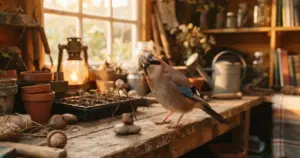
You know that feeling when a small idea turns up, a different way to fix a hinge or a line for a song, and you can’t tell whether it counts for anything? This test does not decide whether you are a creative person or how good your ideas are. It looks at how creativity shows up in your life right now: what you try, what you finish, how far it travels. Choose the answer that feels closest to you at the moment, and at the end you get a short reading. It takes about four minutes. What might you notice if you looked at your own days kindly?

Creativity Test
Creativity on Pause
Some seasons are for keeping things simple. This looks like one.
Chances are you reach for what already works: the usual route, the usual order of doing things. Ideas float past and get a nod.
If you have been telling yourself you are just not a creative person, you can put that sentence down. These answers describe your days lately, and days are not a ruling on you.
Someone who reaches for what works is putting energy into the task itself, not into extra versions of it. Plans move ahead without detours, and that is a quiet kind of ease.
Whether you could think up ten other routes is a separate question, and this test does not ask it. A piano is still a piano when the lid stays down.
One small step: pick up one ordinary object near you and turn it over for a minute, wondering what else it could be.
StillNormal

Maryna Lyadneva psychologist
Creativity Test
Creativity on Pause
Some seasons are for keeping things simple. This looks like one.
Chances are you reach for what already works: the usual route, the usual order of doing things. Ideas float past and get a nod.
If you have been telling yourself you are just not a creative person, you can put that sentence down. These answers describe your days lately, and days are not a ruling on you.
This is my result. What will the test show you?
Take the test · stillnormal.com
Creativity Test
Ideas in Private
You are not stuck. You are still gathering.
It seems ideas turn up all the time: a different way to do a chore, a what-if at the bus stop. Then they stay in your head, and the page stays blank.
That is a common and entirely legitimate stage, with plenty of good company in it.
A private idea can't be judged and never has to be finished, so it stays as odd and as large as you like. You get a rich stream of alternatives without the cost of completing and showing them.
Having ideas and finishing them are two separate behaviors, and the second says nothing about a shortage of the first. A seed packet is not a failed garden.
One small step: type one idea from today into a note on your phone, in a single line.
StillNormal
Maryna Lyadneva psychologist
Creativity Test
Ideas in Private
You are not stuck. You are still gathering.
It seems ideas turn up all the time: a different way to do a chore, a what-if at the bus stop. Then they stay in your head, and the page stays blank.
That is a common and entirely legitimate stage, with plenty of good company in it.
This is my result. What will the test show you?
Take the test · stillnormal.com
Creativity Test
Making It Real
Finishing something is already the hard part. You keep doing it.
You start things and carry them to the end: a shelf, a short story. It happens in several corners of your life, and the results sit in a drawer or on a friend's screen.
Nobody has to broadcast what they make for it to count. Keeping finished things close is a fine place to be.
Reaching the end of something takes patience, and you have done it across different areas. A small circle is also gentle: the people who know you give kind answers, and the thing stays whole.
This middle spot has a clear shape: made, finished, kept near. A jar of jam that never leaves the kitchen is still a whole jar of jam.
One small step: show one finished thing to one person you trust today.
StillNormal
Maryna Lyadneva psychologist
Creativity Test
Making It Real
Finishing something is already the hard part. You keep doing it.
You start things and carry them to the end: a shelf, a short story. It happens in several corners of your life, and the results sit in a drawer or on a friend's screen.
Nobody has to broadcast what they make for it to count. Keeping finished things close is a fine place to be.
This is my result. What will the test show you?
Take the test · stillnormal.com
Creativity Test
Shared Around
Why does sharing still feel exposed? Because it is.
You show what you make as a matter of course, and now and then it lands with people who don't know you: someone asks for a copy, someone builds on your idea. It has happened several times.
That flutter is not a sign that you are doing it wrong. It is what an open door feels like.
Putting work in front of people on purpose costs something that keeping it private never does: you can be misread or passed over. Your pattern means paying that cost repeatedly, not once.
Judging by your answers, the payoff is just as real. What you make is not locked inside one head. It circulates and sometimes gets built on. The tiredness after each showing is honest, and it is allowed.
One small step: make yourself a cup of tea and sit for ten minutes with nothing to share.
StillNormal
Maryna Lyadneva psychologist
Creativity Test
Shared Around
Why does sharing still feel exposed? Because it is.
You show what you make as a matter of course, and now and then it lands with people who don't know you: someone asks for a copy, someone builds on your idea. It has happened several times.
That flutter is not a sign that you are doing it wrong. It is what an open door feels like.
This is my result. What will the test show you?
Take the test · stillnormal.com
Creativity Test
Work That Travels
Your work has traveled far beyond your circle. People pass it along.
What you make gets picked up by people you have never met: they use it and hand it on. It has happened repeatedly.
This records how far the behavior has gone. Talent, IQ and potential are separate questions that a result like this leaves alone, and so is the quality of any single idea. There is nothing to live up to.
Work spreads when someone with no stake in you finds it useful or moving and hands it on, and yours has been handed on several times over, in different forms.
The cost is upkeep. Each round of finishing and showing asks for fresh effort, and rest is part of that work.
One small step: reread one thing you made a while ago and enjoy it as a reader.
StillNormal
Maryna Lyadneva psychologist
Creativity Test
Work That Travels
Your work has traveled far beyond your circle. People pass it along.
What you make gets picked up by people you have never met: they use it and hand it on. It has happened repeatedly.
This records how far the behavior has gone. Talent, IQ and potential are separate questions that a result like this leaves alone, and so is the quality of any single idea. There is nothing to live up to.
This is my result. What will the test show you?
Take the test · stillnormal.com Maryna Lyadneva psychologist
How this test works
Where the questions come from, what the scale rests on, and why the result is not a diagnosis.
Self-reported creative behavior in everyday life: how ideas show up, how open a person is to curiosity and the unconventional, in how many areas creativity appears, and how far the results get finished, shown and taken up.
Methodology
The questions describe scenes from ordinary life. They ask how ideas show up, such as finding a second way or an unexpected link, how curious and at ease a person is with the unconventional, how many areas of life they create in, and how far what they make travels, from staying private to reaching people well beyond the circle. A last group looks at whether personal projects reach the end and get shown. The approach follows validated questionnaires on everyday creative behavior and achievement.
This is a report on what a person does, and no idea is scored. Classic creativity tests work differently: they set a task and rate the ideas that come out of it. Self-report and such tasks agree only weakly to moderately, which is why the result speaks about behavior and nothing more. Ability, talent, IQ-style potential, giftedness and future success all lie outside its scope. In pooled research, intelligence and creativity are linked only weakly, and the link changes with the part of creativity being measured. A definition of the term appears in a psychology dictionary entry on creativity. Because answers come from the person's own view, they give a snapshot, not a full picture.
The test is not a diagnostic instrument and does not replace a specialist. It is a self-report of creative behavior, not an idea task or a rating of talent, and the result describes the present, not the quality of ideas or what follows.
Questions
Is this the kind of test where you list all the uses for a brick?
Not quite. Brick-style tasks grade how inventive your answers are, and this format has no way to run them. Here you describe what you actually do, following a different, well-tested tradition of questionnaires. Describing your habits and being graded on your ideas are different things, and studies find only a modest link between them.
Does being smart make you more creative?
Only slightly. When studies are pooled, the tie between intelligence and creativity comes out weak, and closer looks show it shifts depending on whether you count how many ideas someone produces or how good their best ones are. There is no cutoff past which creativity switches on.
Do you have to make traditional art to count as creative?
No. Making things, fixing them, writing, arranging ideas and solving daily puzzles all count here, and a quiet visual side does not pull the result down by itself.
Is creativity something you're born with, or can it be practiced?
The test cannot say where creativity comes from. It asks about what shows up in your life: whether ideas get played with, whether things get finished and shown. Those habits move with how you live, so the result is a picture of now rather than a fixed score. Reports of behavior and measured ability sit only loosely together, so it would be a stretch to read more into it.
Does this test tell you what kind of creative person you are?
No, and that is by design. The result is one overall picture of how much creative behavior is in your life at the moment. Making, building, writing and everyday problem-solving are added together, so no label such as maker or writer comes out.
Sources
- Kaufman, J. C., & Beghetto, R. A. (2009). Beyond Big and Little: The Four C Model of Creativity. Review of General Psychology, 13(1), 1–12. doi:10.1037/a0013688
- Kaufman, J. C. (2012). Counting the muses: Development of the Kaufman Domains of Creativity Scale (K-DOCS). Psychology of Aesthetics, Creativity, and the Arts, 6(4), 298–308. doi:10.1037/a0029751
- Carson, S., Peterson, J. B., & Higgins, D. M. (2005). Reliability, Validity, and Factor Structure of the Creative Achievement Questionnaire. Creativity Research Journal, 17(1), 37–50. doi:10.1207/s15326934crj1701_4
- Runco, M. A., Plucker, J. A., & Lim, W. (2001). Development and psychometric integrity of a measure of ideational behavior. Creativity Research Journal, 13(3–4), 393–400. doi:10.1207/S15326934CRJ1334_16
Related tests
 Aphantasia Apple Test
A few quiet questions about an apple, a face and a familiar street, to find out what your inner pictures are actually like.
 Aphantasia Test
Close your eyes and picture something. A quiet test about how bright the pictures in your mind run, and a gentle read on how you think.
 Emotional Intelligence Test
A gentle look at how you notice your own feelings and other people's. Six minutes, no grades, just a description of your habits.
Take with you
What you can take
The story card and one step for today. Saved to your phone in one tap, no sign-up.
For stories
One small step
StillNormal
Send it to someone who needs it
Came across a calm little test and thought of you. Want to try it?
One small step
StillNormal
How others answered
How others answered appears once 100 people have taken it.
That hunch you've had about yourself
You've had hunches about who you are for a while now — all that's left is to see if you're right. The free CoreTypes test brings them together into one picture, and things start to click: decisions, relationships, what's genuinely yours.
Put it to the testHow this test works
Where the questions come from, what the scale rests on, and why the result is not a diagnosis.